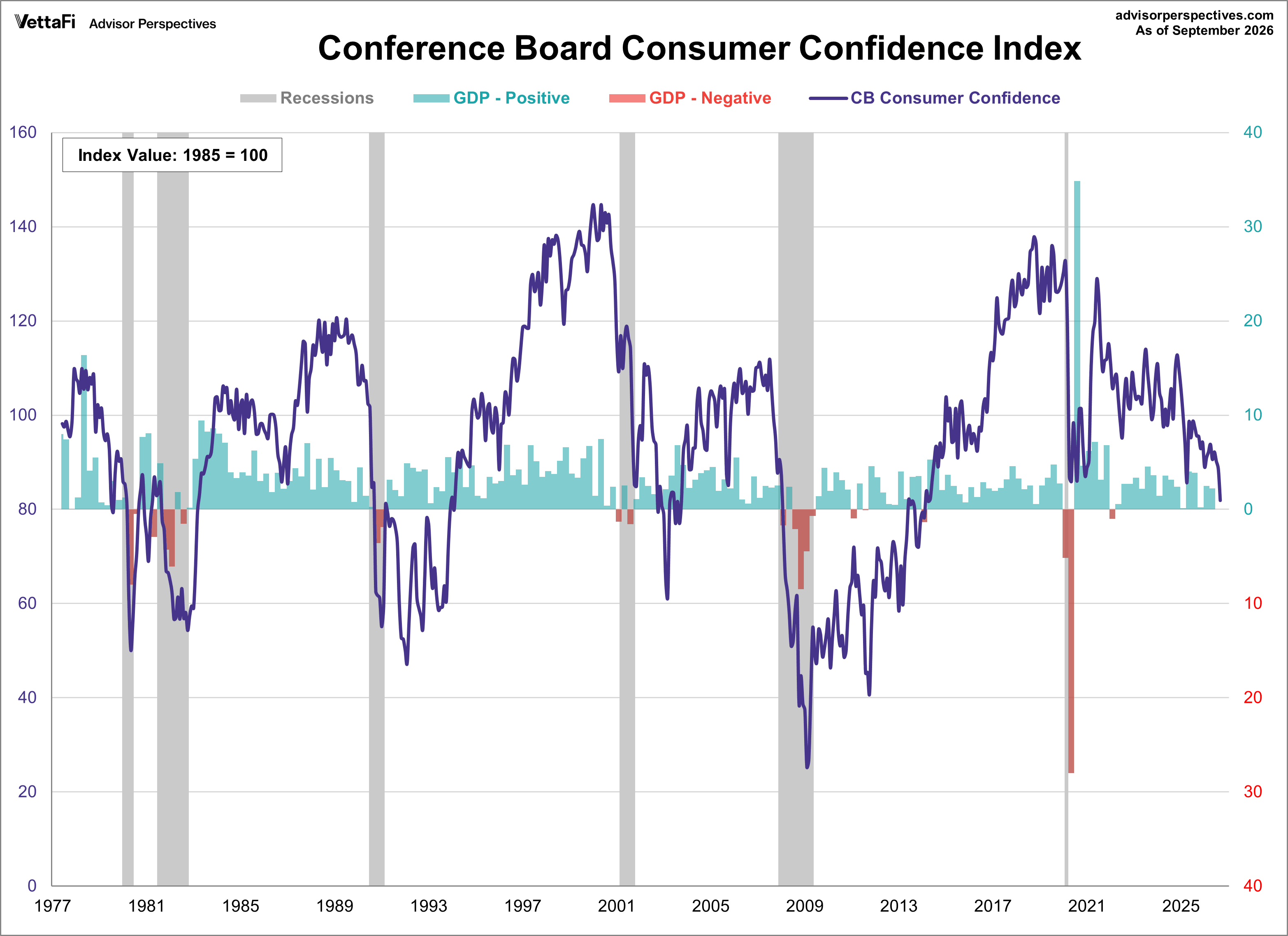
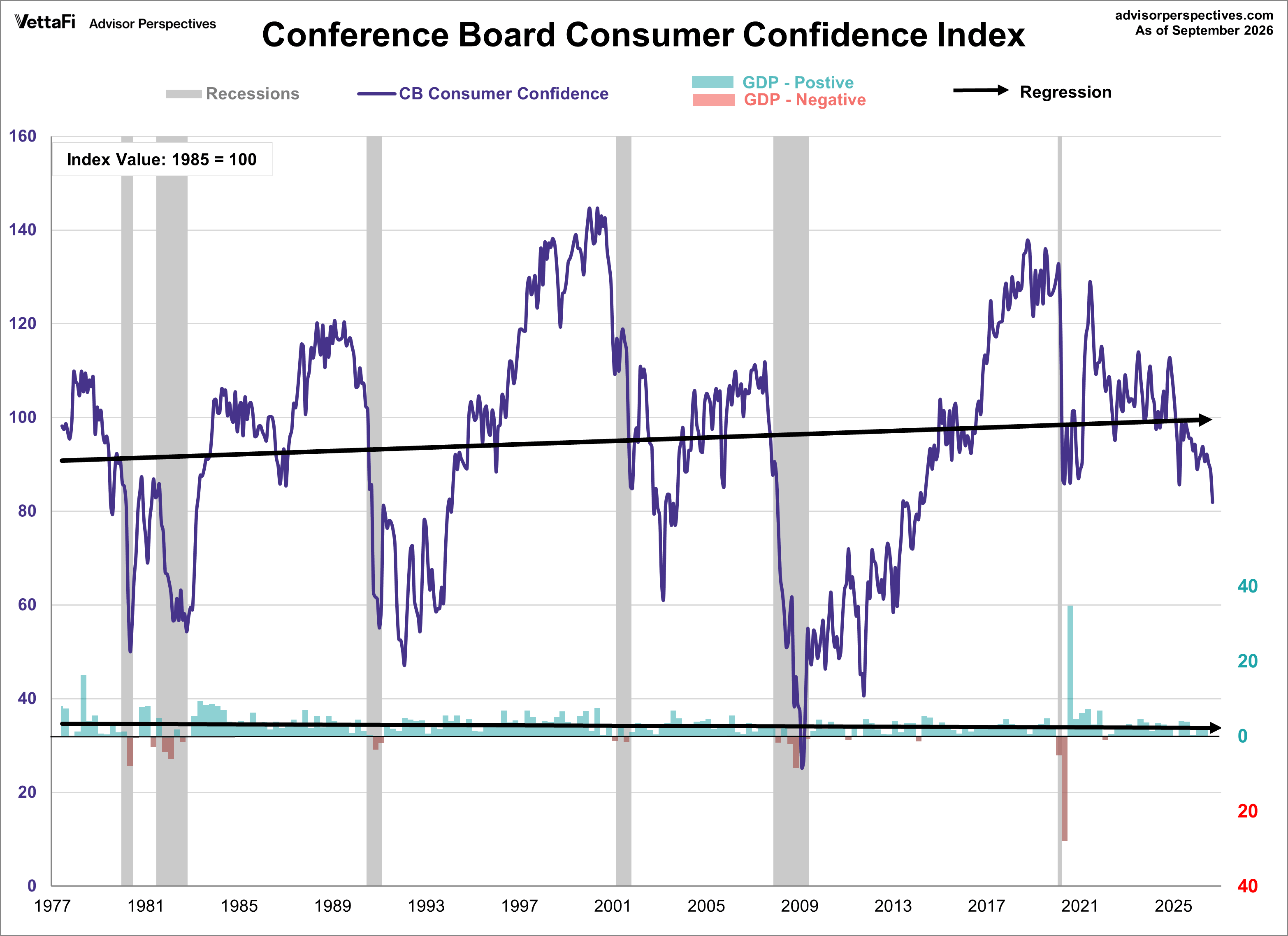
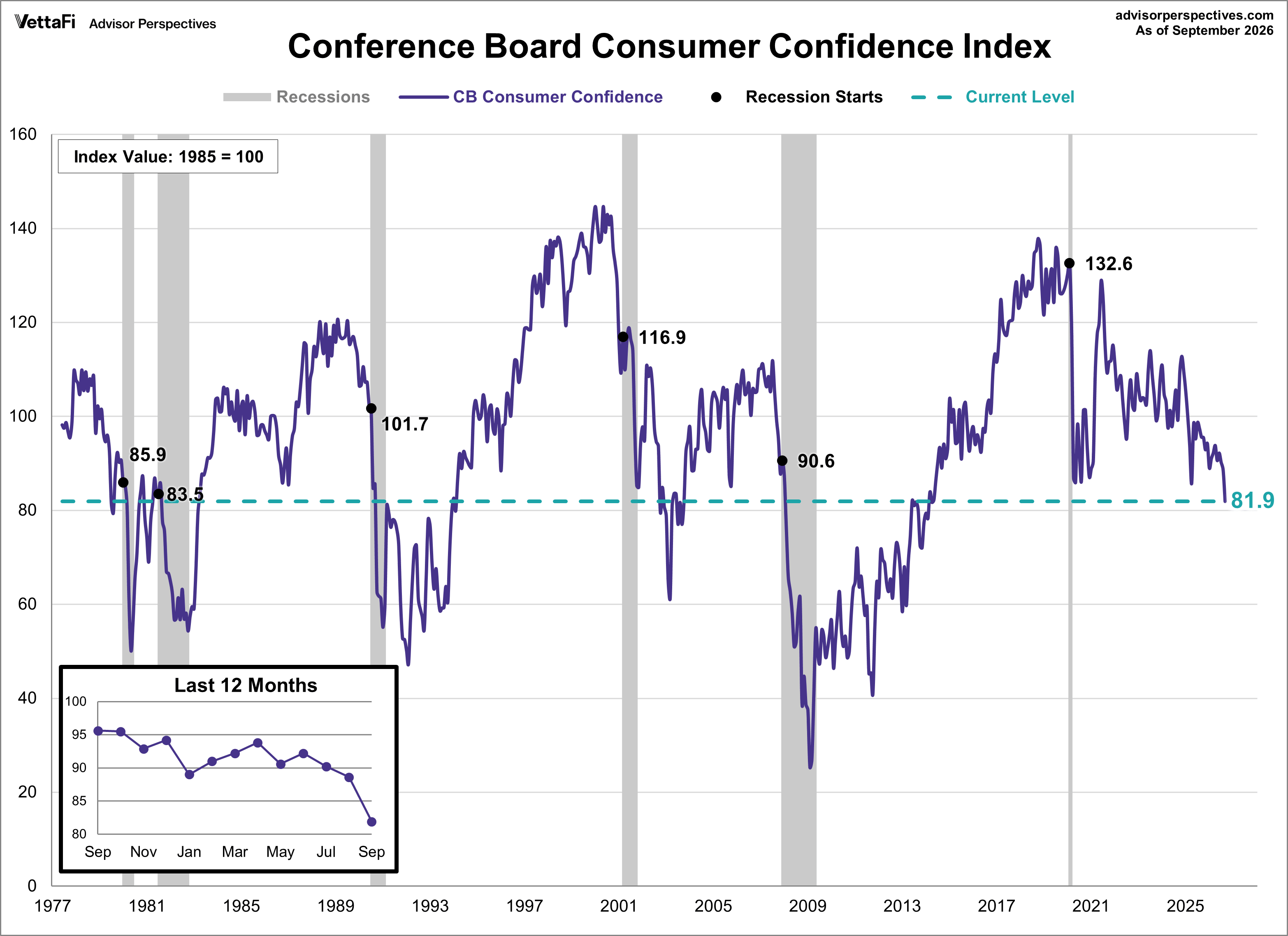
The Conference Board's Consumer Confidence Index® fell significantly more than expected in September, falling 6.7 points to 81.9. The index was far below the forecast of 89.2. Note that the survey period for this month’s preliminary results was September 1-23, which included a federal funds rate hike and ongoing geopolitical tensions
Key Takeaways
-
The Conference Board's Consumer Confidence Index® decreased by 6.7 points to 81.9 in September, missing forecast of 89.2.
-
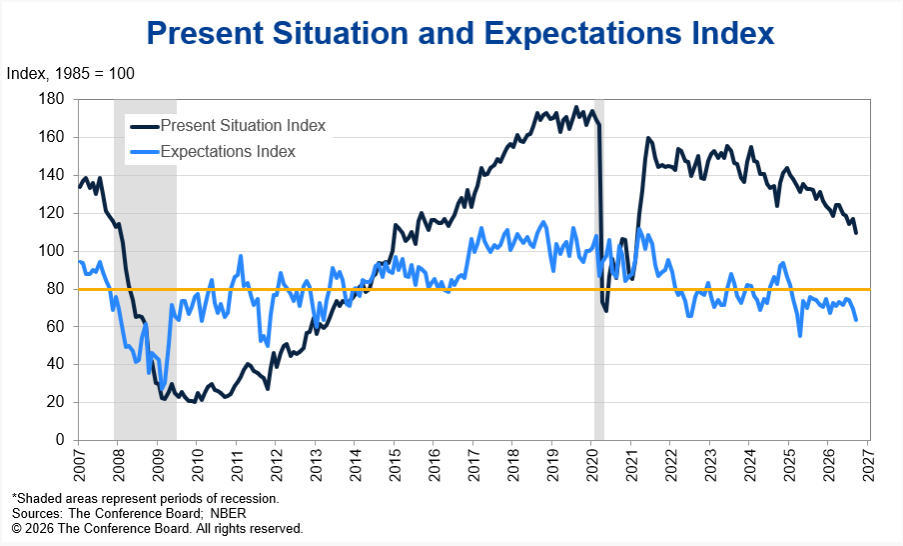
The Present Situation Index fell 7.9 points to 109.3.
- The Expectations Index fell 5.9 points to 63.6, staying below the recessionary 80.0 threshold since February 2025.
The Present Situation Index, which is based on consumers' assessment of current business and labor market conditions, fell 7.9 points to 109.3. Meanwhile, the Expectations Index, which is based on consumers' short-term outlook for income, business, and labor market conditions, fell by 5.9 points to 63.6. Note that a level of 80 or below for the Expectations Index historically signals a recession within the next year and the index has been below 80 since February 2025.
“The Consumer Confidence Index deteriorated notably in September, following two prior months of softening,” said Dana M Peterson, Chief Economist, The Conference Board. “The Present Situation Index fell sharply, while the Expectations Index slipped further into negative territory. Consumer appraisals of current business conditions became negative for the first time since September 2024. Perceptions of the current labor market also worsened, though remained within positive territory. Over the next six months, consumers expected both business conditions and the labor market to weaken. Consumers still anticipated their household incomes to rise, but less so compared to previous months.”
Consumers’ write-in responses regarding factors affecting the economy were mostly pessimistic in September. References to prices, the high cost of goods and services, and oil and gas prices in particular, rose to new heights, reflecting September’s surge in fuel costs. Comments about war/conflict eased this month but remained elevated. Consumers also frequently cited politics, trade, and employment in their write-in responses, though to a lesser extent.
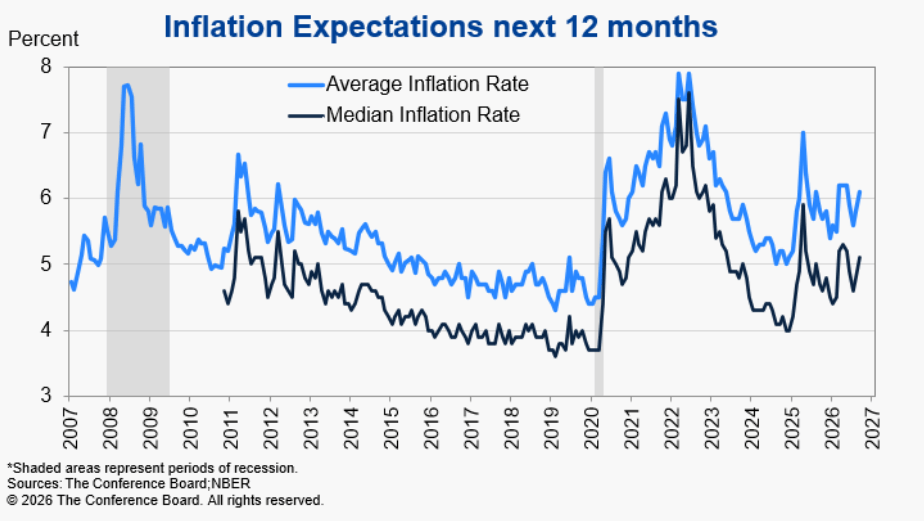
Consumers’ average and median 12-month inflation expectations rose 0.3 ppts in September to 6.1% and 5.1% respectively. The share of consumers anticipating higher interest rates over the next 12 months jumped by 5.2 ppts to 68.4%. Consumers still largely expected stock prices to rise in the next 12 months, but optimism moderated in September.
Background on the Consumer Confidence Index
The Conference Board Consumer Confidence Index measures the consumers attitudes and confidence in the economy, business conditions, and labor market, with higher readings indicating higher optimism. The general assumption is that when consumers are more optimistic they will spend more and stimulate economic growth. However, if consumers are pessimistic then spending will decline and the economy may slow down. The index is based on a 5 question survey, with 2 questions related to present conditions and 3 questions related to future expectations. The survey began in 1967 and was conducted every two months but changed to monthly reporting in 1977.